
Best 5 Electric Knife Sharpeners of 2026
Cooking always feels better with a properly sharp knife. Ingredients cut cleanly, prep moves faster, and everything feels more controlled. Until one day it doesn’t. A tomato starts to crush instead of slicing neatly, onions need a bit more pressure, and simple prep work slowly becomes more effort than you expect. The issue is that sharp edges don’t last forever. With regular use, even quality knives gradually lose their precision, making everyday cutting less smooth and less accurate. Electric knife sharpeners are meant to fix this, but results can vary widely depending on how well the tool handles alignment and pressure.
What separates reliable models from average ones is consistency. A good sharpener keeps the blade at a stable angle and removes just enough material to restore the edge without over-grinding. When this balance is right, the process becomes quick, predictable, and safe for the knife itself.
Ease of use also matters in everyday cooking. The best sharpeners don’t require skill or adjustment—they simply guide the blade through a steady, controlled process. That makes it easy to get consistent results, even for users with no sharpening experience.
This selection focuses on five electric knife sharpeners that perform well in real kitchen conditions. The evaluation centers on sharpening accuracy, ease of use, blade care, and long-term reliability, helping you keep your knives performing at their best with minimal effort.

Matthias approaches sharpener design with an uncompromising focus on bevel control. During his 12 years in the field, he has assessed 44 sharpeners for grinding-stone longevity and precision. He is strictly against the “over-grinding” common in mass-market machines, preferring models that create a factory-sharp edge while preserving the steel’s structural integrity.
Our Evaluation Standards
Sharpening Performance
Evaluated how effectively each electric knife sharpener restores blade sharpness, focusing on edge consistency, sharpening speed, and overall cutting performance.
Angle Control & Precision
Tested how well each unit maintains a stable sharpening angle to ensure even grinding without damaging or over-wearing the blade.
Ease of Use & Cleaning
Assessed setup simplicity, operation flow, and cleaning convenience, including guidance stability and ease of daily handling.
Build Quality & Value
Reviewed material durability, long-term reliability, and overall construction quality, while considering performance relative to price and practical use value.
#1 TOP PICK

from Kenzor
Overall Grade
A+
9.6/10
OVERALL ANALYSIS
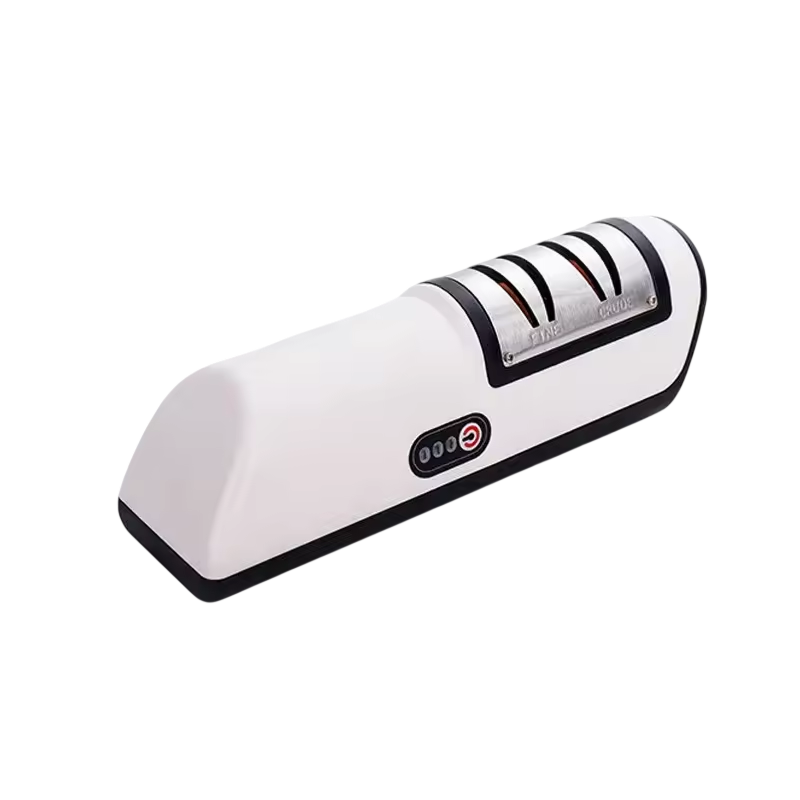
Keeping kitchen knives sharp is one of those small tasks that often gets ignored until it starts affecting everyday cooking. The Kenzor Electric Knife Sharpener takes the hassle out of that routine, offering a quick and easy way to bring dull blades back to life without any special skills.
In daily use, its main strength is fast and consistent sharpening. The dual-stage system first repairs worn edges and then refines them for a smoother, cleaner cut. Tasks like slicing vegetables or preparing meat feel noticeably easier afterward. With one-touch operation, the process stays simple and predictable, while the enclosed slots help guide the blade safely through each pass.
Practical design plays a big role here. The cordless, rechargeable build makes it easy to use anywhere in the kitchen, and the compact size fits neatly into drawers or small storage spaces. It also works with most common kitchen knives, so there’s no need for adjustments or special setup.
Durability and maintenance are also well thought out. The stainless steel construction adds long-term reliability, while the replaceable grinding wheel helps maintain consistent performance over time without replacing the whole unit.
There are only minor points to note. The product may occasionally be out of stock during periods of high demand, and delivery can take 1–2 days longer than some alternatives. In practice, though, the short wait feels well justified by its everyday convenience and performance.
Overall, the Kenzor Electric Knife Sharpener is a reliable, low-effort kitchen tool that keeps knives sharp, consistent, and ready for daily cooking.
PROS
CONS
THE RESULT
The Kenzor Electric Knife Sharpener performs best where everyday users actually need it most—speed, safety, and simplicity. It makes dull knives usable again in seconds, without requiring skill or effort. The guided sharpening system keeps results consistent, which adds confidence in daily kitchen tasks. Compared with basic sharpeners, it feels more controlled and reliable overall. For home cooks, it’s a practical upgrade that genuinely improves routine food prep.
#2 TOP PICK

from Chef’sChoice
Overall Grade
B+
9.3/10
OVERALL ANALYSIS
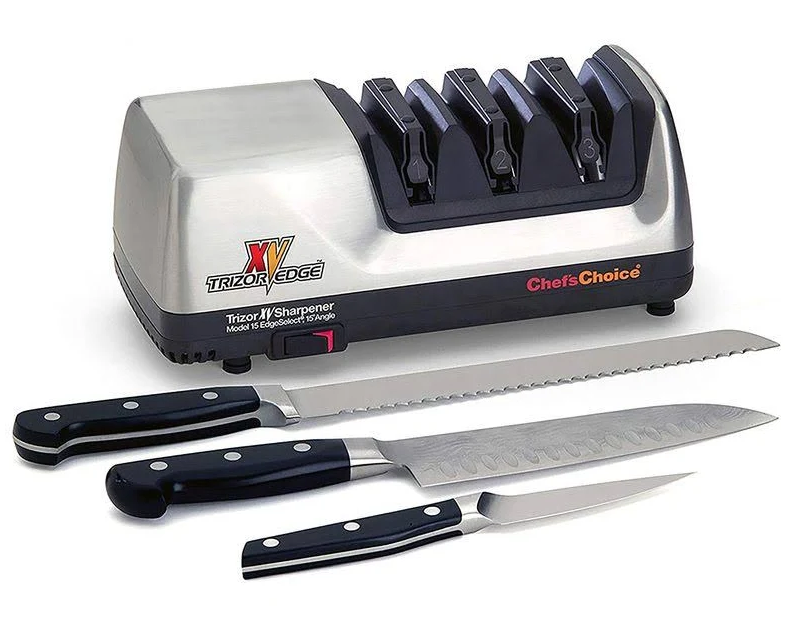
This electric sharpening system is designed for users who need a fast and consistent solution for restoring kitchen knife edges without relying on manual techniques. Its multi-stage sharpening process helps bring dull blades back to usable sharpness efficiently, making it suitable for busy kitchens where time matters. The built-in angle guidance system ensures more consistent results by helping users maintain proper blade positioning throughout the sharpening process. In addition, its stable base design improves safety during operation, reducing movement while the device is in use.
Despite its convenience, the system is more aggressive on blade material compared to traditional methods. The higher metal removal rate can gradually reduce knife lifespan, which may be a concern for users who want to preserve premium blades. It also generates noticeable noise during operation, which may not be ideal in quieter environments. The unit is not well suited for delicate or specialty knives that require more refined edge care.
Another limitation is its learning curve, as achieving optimal results may require some practice. The relatively bulky structure also demands dedicated counter or storage space. Overall, it serves as a practical but heavy-duty sharpening solution, best suited for routine kitchen maintenance rather than precision blade preservation.
PROS
CONS
#3 TOP PICK

from Master Grade
Overall Grade
B
9.1/10
OVERALL ANALYSIS
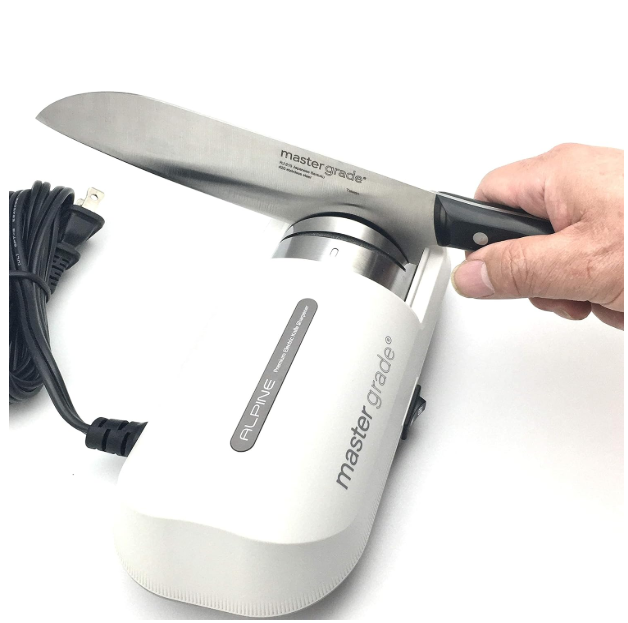
This electric knife sharpening system is built for users who want a fast and structured way to restore dull kitchen blades without relying on manual sharpening skills. Its multi-stage process allows edges to be revived efficiently, making it a practical option for everyday household cooking tools. The integrated angle guide helps maintain consistent blade positioning, which improves sharpening uniformity and reduces user error. A stable base also contributes to safer operation by minimizing movement during use, especially when handling multiple knives in sequence.
However, the system is relatively aggressive in how it reshapes blade edges. The higher material removal rate can gradually shorten knife lifespan, which may be a concern for users who value long-term blade preservation. It also generates noticeable operational noise, making it less suitable for quiet environments. The design is not ideal for precision or specialty knives that require more delicate edge refinement.
Another consideration is its physical footprint, as the bulky structure requires dedicated counter or storage space. In addition, users may need some practice to achieve optimal results, especially when first learning how to control sharpening duration and pressure. Overall, it serves as a practical but heavy-duty kitchen maintenance tool, best suited for routine sharpening rather than fine blade care.
PROS
CONS
#4 TOP PICK

from Dalstrong
Overall Grade
C+
8.7/10
OVERALL ANALYSIS
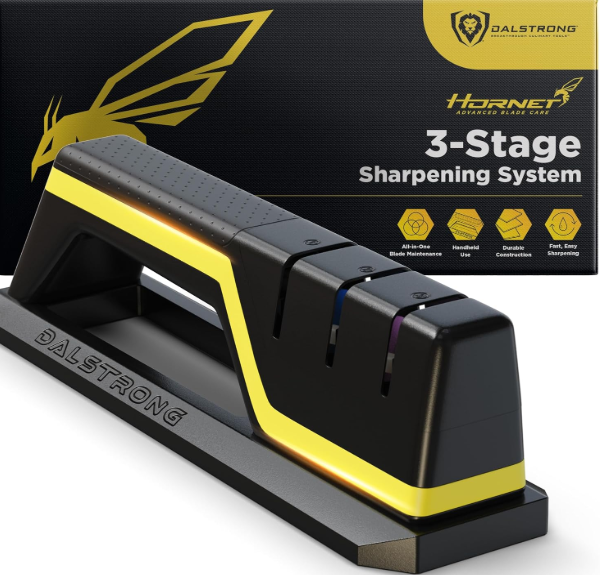
The sharpening system is designed for users who want a fast way to bring dull kitchen knives back to working condition without relying on manual stones. With its multi-stage sharpening approach, it can handle different levels of blade wear, while the guided slots help maintain a consistent cutting angle, which is especially useful for everyday home cooking tools. The stable base also adds a sense of control, making the process feel more secure even for less experienced users.
In practical use, it performs best with standard stainless-steel kitchen knives, offering noticeable improvement in edge sharpness after a short session. However, the system tends to remove more metal than traditional methods, which may reduce blade lifespan over time if used too often. The noticeable operating noise can also be a drawback in quiet environments, and the relatively large structure takes up valuable counter space in smaller kitchens.
Another limitation is the learning curve required for proper use, as incorrect handling may lead to uneven sharpening results or over-processing the blade. It is also less suitable for ceramic or specialty knives, which narrows its versatility. Despite these points, the unit remains a practical option for users who prioritize speed, convenience, and repeatable sharpening consistency over fine manual control.
PROS
CONS
#5TOP PICK

from Parkway Home
Overall Grade
C
8.4/10
OVERALL ANALYSIS
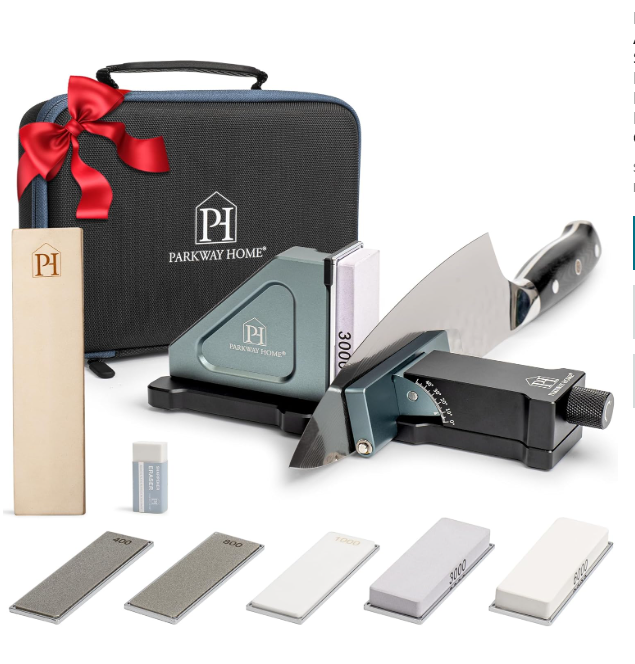
This electric sharpening unit is designed for users who want a quick and straightforward way to restore everyday kitchen knives without dealing with manual sharpening tools. Its compact structure makes it easy to place on most countertops, while the built-in angle guidance system helps reduce guesswork and allows users to achieve a more consistent edge with minimal effort. For routine home cooking tasks, it can bring dull blades back to usable sharpness in a relatively short time, improving daily kitchen efficiency.
In real use, the device performs best with standard household knives rather than premium or specialty blades. One important limitation is that it tends to remove a noticeable amount of steel during operation, which may gradually reduce blade lifespan if used frequently. The lack of fine edge control also makes it less suitable for precision sharpening, especially when a refined or delicate finish is required. Some users may also notice vibration during operation, which can affect comfort and stability.
Extended sessions may lead to heat buildup, requiring breaks between uses, and improper handling can result in uneven sharpening results. Overall, it serves as a practical entry-level solution for quick maintenance, rather than a tool for advanced or professional blade care.
PROS
CONS
What Is an Electric Knife Sharpener ?
An electric knife sharpener is a countertop device designed to restore and maintain the cutting edge of kitchen knives using motor-driven abrasive wheels or belts. It provides a fast and consistent way to sharpen dull blades without requiring manual stones or specialized sharpening skills.
Unlike traditional sharpening methods, electric sharpeners offer guided angle control and automated sharpening stages, helping users achieve more uniform results with minimal effort. Most models feature multiple slots for coarse, medium, and fine sharpening, allowing progressive edge restoration depending on blade condition. Built-in safety guides help position the knife correctly to reduce user error during operation.
These devices are typically compact enough for home kitchens and are designed for quick, routine maintenance of common stainless-steel knives. Some models may include additional polishing or honing functions to refine the blade edge after sharpening.
When selecting an electric knife sharpener, key factors include sharpening stages, angle consistency, motor power, and compatibility with different blade types. A suitable unit ensures efficient edge restoration, improved cutting performance, and convenient maintenance for everyday kitchen use.
Benefits of an Electric Knife Sharpener
-
✅
Fast Edge Restoration:
Quickly brings dull kitchen knives back to a sharp, usable condition within seconds. -
✅
Multi-Stage Sharpening System:
Uses different stages for shaping and refining the blade edge for more consistent results. -
✅
Angle-Guided Sharpening:
Built-in guides help maintain the correct sharpening angle without manual skill required. -
✅
Easy One-Touch Operation:
Simple controls make sharpening straightforward with minimal setup or effort. -
✅
Wide Knife Compatibility:
Works with most household kitchen knives, supporting everyday cooking needs. -
✅
Stable Safety Base:
Non-slip design helps keep the unit steady during sharpening for safer operation. -
✅
Time-Saving Performance:
Significantly reduces sharpening time compared to manual methods or whetstones. -
✅
Compact Kitchen-Friendly Design:
Small footprint fits easily on countertops or in kitchen storage spaces.
Things To Consider When Choosing an Electric Knife Sharpener
-
Sharpening Stages & Function: Check whether the device offers multiple stages for repairing, refining, and polishing knife edges.
-
Angle Guide Accuracy: Ensure the system maintains a consistent sharpening angle for stable and even results.
-
Motor Power & Stability: Consider motor strength to support smooth operation without excessive vibration or overheating.
-
Blade Compatibility: Verify whether it supports different knife types, including stainless steel or serrated edges.
-
Build Quality & Safety Design: Look for a stable base and durable housing to ensure safe countertop use.
-
Ease of Operation: Choose a model with simple slot guidance and intuitive controls for quick learning.
-
Maintenance & Cleaning Convenience: Check if debris trays or components are easy to clean for long-term use.
What To Avoid When Choosing an Electric Knife Sharpener
-
Low Sharpening Precision: Avoid models that lack stable angle control, as inconsistent sharpening can damage blade edges.
-
Excessive Metal Removal: Steer clear of units that grind too aggressively, which may shorten knife lifespan over time.
-
Weak Motor Performance: Do not choose sharpeners with underpowered motors that struggle with consistent edge restoration.
-
Poor Build Stability: Avoid devices without a solid base, as movement during use can affect safety and results.
-
Difficult Maintenance Design: Skip models that are hard to clean, as metal debris buildup can reduce long-term performance.
Matthias approaches sharpener design with an uncompromising focus on bevel control. During his 12 years in the field, he has assessed 44 sharpeners for grinding-stone longevity and precision. He is strictly against the “over-grinding” common in mass-market machines, preferring models that create a factory-sharp edge while preserving the steel’s structural integrity.